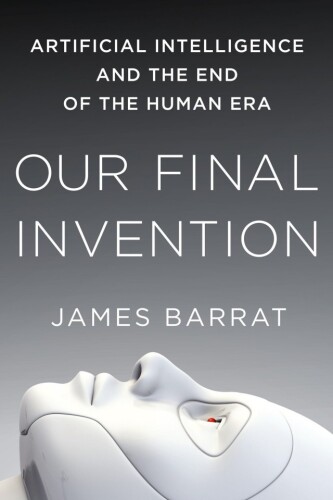
Our Final Invention: Artificial Intelligence and the End of the Human Era is a thought-provoking exploration of artificial intelligence, advanced machine intelligence, AI safety, and the possible long-term consequences of creating increasingly capable AI systems. The book examines one of the most important questions of the modern technological age: what could happen if artificial intelligence eventually becomes more capable than humans across a wide range of intellectual tasks?
Artificial intelligence is developing rapidly, with modern systems capable of generating text and images, analyzing information, writing software, solving complex problems, and assisting with scientific research. These advances offer enormous potential benefits, but they also raise difficult questions about control, safety, human responsibility, and the future of civilization. Our Final Invention explores these issues from a critical perspective.
A central theme of the book is artificial general intelligence (AGI) and the possibility that machines could eventually reach or exceed human-level intelligence. Unlike narrow AI systems designed for specific tasks, AGI is often described as a form of machine intelligence capable of performing many different intellectual activities. The development of such systems could represent a major turning point in human history.
The book focuses particularly on the challenges of AI alignment and control. If advanced AI systems become significantly more capable than their creators, ensuring that their objectives remain compatible with human values could become increasingly difficult. The book examines why researchers and technology leaders are concerned about these challenges and why AI safety has become an important area of research.
Our Final Invention also considers the motivations behind the race to develop increasingly powerful AI. Technology companies, researchers, entrepreneurs, and governments have strong incentives to advance artificial intelligence because of its potential economic and strategic benefits. However, rapid competition can create difficult questions about whether technological development is moving faster than society’s ability to understand and manage its consequences.
Another important aspect of the book is its examination of humanity’s relationship with technology. Throughout history, technological innovations have changed economies, societies, and individual lives. Advanced artificial intelligence could represent a fundamentally different kind of technological development because intelligent systems may eventually participate in the process of designing and improving future technologies themselves.
For readers interested in artificial intelligence, AGI, AI safety, machine learning, technology ethics, existential risk, and the future of humanity, this book provides a challenging and accessible perspective. It encourages readers to think beyond the immediate benefits of AI and consider the long-term implications of increasingly autonomous and capable machines.
If you are searching for an AI book, artificial general intelligence guide, AI safety book, technology ethics resource, future of humanity book, machine intelligence book, or AI risk analysis, Our Final Invention offers a compelling examination of these subjects.
The book is especially relevant for technology professionals, researchers, students, policymakers, entrepreneurs, and general readers who want to understand why advanced AI has become the subject of intense debate. It raises questions about how humanity can encourage beneficial innovation while also preparing for potentially serious risks.
Ultimately, Our Final Invention: Artificial Intelligence and the End of the Human Era challenges readers to consider whether humanity is prepared for the creation of machines that could surpass human intelligence. Rather than treating AI as merely another technological tool, the book asks readers to think about the deeper consequences of developing systems that may one day possess extraordinary capabilities.
By exploring AI development, safety, alignment, competition, and existential risk, Our Final Invention provides a timely perspective on one of the defining technological questions of the twenty-first century: how can humanity build a future in which artificial intelligence remains beneficial, controllable, and aligned with human interests?