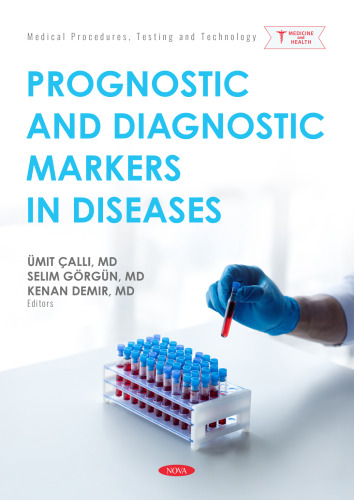
Prognostic and Diagnostic Markers in Diseases is a comprehensive and clinically oriented resource that explores the important role of biomarkers and laboratory indicators in the detection, evaluation, monitoring, and management of disease. Designed for medical students, healthcare professionals, and learners interested in diagnostic medicine, the book provides an accessible overview of how diagnostic and prognostic markers contribute to modern patient care.
Diagnostic markers are essential tools for identifying diseases, confirming clinical suspicions, distinguishing between similar conditions, and assessing the extent of pathological changes. The book introduces readers to the principles behind commonly used markers and explains their relevance in different disease processes. It highlights how biochemical, molecular, hematological, immunological, genetic, and tissue-based markers can provide valuable information for accurate diagnosis.
Prognostic markers, meanwhile, help healthcare professionals estimate the likely course and outcome of a disease. Understanding these markers can assist in identifying patients at higher risk of complications, recurrence, disease progression, or poor outcomes. The book explains how prognostic information can complement clinical findings and support individualized approaches to patient management.
A major strength of the book is its emphasis on the clinical interpretation of markers rather than simply presenting lists of laboratory values. Readers are encouraged to understand the significance of elevated, reduced, or altered marker levels and how these findings should be considered alongside symptoms, physical examination, imaging studies, medical history, and other laboratory investigations. This integrated approach reflects the way diagnostic information is applied in everyday clinical practice.
The book covers markers relevant to a broad range of diseases and clinical specialties. Particular attention is given to their applications in areas such as cancer, cardiovascular disorders, infectious diseases, endocrine and metabolic conditions, liver and kidney diseases, neurological disorders, and inflammatory or autoimmune conditions. Molecular and emerging biomarkers are also discussed to provide insight into the rapidly developing field of precision medicine.
With its focus on clinically relevant concepts, Prognostic and Diagnostic Markers in Diseases can serve as a useful reference for understanding the growing importance of biomarkers in contemporary healthcare. It demonstrates how advances in laboratory science, molecular biology, immunology, and genetics are expanding the ability of clinicians to detect disease earlier, assess disease severity, predict outcomes, and monitor responses to treatment.
Overall, this book provides a valuable foundation for understanding the relationship between biomarkers and clinical decision-making. By combining fundamental principles with disease-oriented applications, it helps readers appreciate how diagnostic and prognostic markers can improve accuracy, guide treatment strategies, and contribute to personalized patient care. It is a useful resource for students preparing for examinations as well as healthcare professionals seeking to strengthen their understanding of modern diagnostic and prognostic approaches.