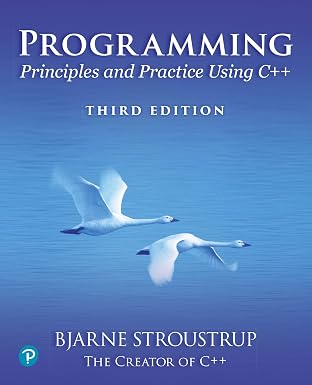
Programming: Principles and Practice Using C++ is a comprehensive and practical introduction to computer programming designed to help beginners develop strong programming skills while learning modern C++. This influential programming book combines fundamental programming concepts, problem-solving techniques, software development principles, and practical C++ examples to create a solid foundation for students, aspiring developers, and anyone who wants to learn how to program effectively.
Rather than simply teaching C++ syntax, this book focuses on the principles and practices of programming. Readers learn how to approach problems systematically, design solutions, write understandable code, test programs, identify errors, and improve software through practice. This approach makes the book useful not only for learning C++, but also for developing transferable programming skills that can be applied to other programming languages.
The book introduces essential concepts such as variables, data types, expressions, statements, functions, classes, objects, vectors, arrays, pointers, references, input and output, and error handling. As readers progress, they encounter more advanced ideas including object-oriented programming, generic programming, templates, the C++ Standard Library, algorithms, data structures, and graphical user interfaces. Each topic contributes to a broader understanding of modern software development.
C++ is known for providing programmers with both high-level programming capabilities and detailed control over computer resources. Learning C++ can therefore help students understand important concepts involving memory, performance, data structures, and program organization. Programming: Principles and Practice Using C++ takes advantage of these characteristics to teach programming concepts through a powerful and widely used language.
A key strength of this C++ programming book is its emphasis on hands-on learning. Programming is a practical skill, and readers are encouraged to write code, experiment with solutions, analyze errors, and solve programming exercises. This practice-oriented approach helps transform theoretical knowledge into real programming ability.
The book is especially suitable for beginners who may have little or no previous programming experience. Its structured progression introduces fundamental ideas before moving toward more sophisticated topics. At the same time, experienced learners can use it to strengthen their understanding of C++ programming principles, software design, and modern programming techniques.
Readers can also develop valuable problem-solving and computational thinking skills. Programming requires more than memorizing commands; it involves breaking complex problems into manageable parts, recognizing patterns, designing algorithms, and evaluating different solutions. By emphasizing these skills, the book helps learners become more confident and independent programmers.
For students studying computer science, software engineering, information technology, or related subjects, this book can serve as a valuable programming textbook and study resource. It can also benefit self-taught developers who want a structured path toward learning C++ and understanding the foundations of professional software development.
C++ continues to be widely used in areas such as systems programming, game development, embedded software, scientific computing, financial applications, desktop software, and performance-intensive applications. Building a strong foundation in C++ can therefore provide useful skills for a wide range of technology careers.
If you are searching for a C++ programming book, C++ tutorial for beginners, computer programming textbook, modern C++ guide, or practical resource for learning programming fundamentals, Programming: Principles and Practice Using C++ is an excellent choice. It combines programming theory with practical development, helping readers understand not only how to write C++ code, but also how to think like a programmer and build reliable, maintainable software.