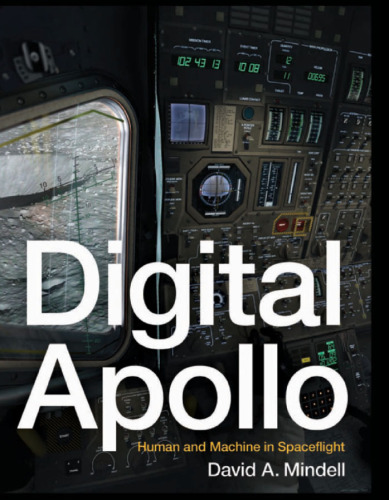
Digital Apollo: Human and Machine in Spaceflight is a fascinating exploration of one of the most important technological achievements in the history of space exploration: the computer systems that helped make the Apollo Moon missions possible. Written by David A. Mindell, this insightful book examines the relationship between astronauts and machines during the Apollo program, offering readers a deeper understanding of how humans and computers worked together in the demanding environment of spaceflight.
The Apollo missions are often remembered for the courage of astronauts and the historic achievement of landing humans on the Moon. However, behind these extraordinary accomplishments was a rapidly developing world of digital technology, guidance systems, computers, engineering, and human-machine interaction. Digital Apollo explores this technological foundation and explains how onboard computers became essential partners in navigation, guidance, control, and mission operations.
A central focus of the book is the Apollo Guidance Computer (AGC), a pioneering digital computer designed specifically for spaceflight. At a time when computing technology was still in its early stages, engineers developed remarkably compact and reliable systems capable of operating aboard spacecraft. These computers had to function under strict limitations involving memory, processing power, size, weight, and reliability. Their development represented a major milestone in the history of computing and aerospace engineering.
The book also examines how astronauts interacted with these machines. Spaceflight required pilots to understand automated systems while remaining prepared to take control when necessary. This created an important partnership between human judgment and computer precision. Rather than replacing astronauts, Apollo’s computers were designed to extend their capabilities and help them manage the extraordinary complexity of lunar missions.
For readers interested in Apollo missions, NASA history, space exploration, computer history, aerospace engineering, and artificial intelligence, Digital Apollo offers an engaging perspective on the evolution of technology. It shows how innovations created for the Moon program influenced broader ideas about automation, control systems, software, and human-machine cooperation.
Another compelling aspect of Digital Apollo is its historical context. The Apollo program emerged during a period of intense technological competition and rapid scientific development. Engineers and scientists faced challenges that had never been encountered before, requiring innovative approaches to spacecraft navigation and mission control. The book demonstrates how these challenges encouraged advances that would have lasting effects far beyond the Apollo missions.
Digital Apollo: Human and Machine in Spaceflight is particularly valuable for anyone curious about what happens behind the scenes of a space mission. It moves beyond the iconic images of astronauts walking on the lunar surface and explores the sophisticated technological systems that supported those historic moments.
Ultimately, Digital Apollo tells a story about more than computers or spacecraft. It is a story about collaboration between people and technology, showing how carefully designed machines can expand human capabilities in extreme environments. By combining the history of the Apollo program with insights into computing and engineering, the book provides a thought-provoking look at one of the defining achievements of the twentieth century.
Whether you are a space enthusiast, technology reader, engineering student, computer history fan, or admirer of NASA’s Apollo program, Digital Apollo offers an informative and compelling journey into the human and technological systems behind humanity’s first missions to the Moon.