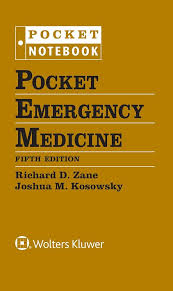
Pocket Emergency Medicine by Richard D. Zane, MD, FAAEM, and Joshua M. Kosowsky, MD, FACEP is a practical medical reference designed to support medical students, emergency medicine residents, physicians, and other healthcare professionals working in fast-paced clinical environments. Part of the well-known Pocket Notebook series, this handbook provides concise, organized information to help readers review common emergency presentations, understand diagnostic considerations, and navigate essential aspects of acute patient care.
Emergency medicine requires rapid assessment, sound clinical reasoning, and the ability to prioritize potentially life-threatening conditions. Healthcare professionals frequently encounter patients whose symptoms may have several possible causes, making a structured approach to evaluation particularly important. Pocket Emergency Medicine addresses these challenges by organizing clinical information around presenting symptoms and conditions, allowing readers to locate relevant material without working through lengthy textbook chapters.
The book covers essential stages of emergency assessment, including medical history, physical examination, differential diagnosis, diagnostic testing, treatment considerations, and patient disposition. Its practical organization helps readers connect clinical findings with possible diagnoses and identify important questions that may guide further evaluation. Concise explanations make the material useful for quick review during clinical rotations, residency training, and emergency medicine study sessions.
A key feature of the Pocket Notebook format is its use of bullet points, tables, diagrams, and clinical algorithms. These visual and structured elements help readers navigate complex medical information efficiently. Rather than presenting every topic as an extended narrative, the handbook emphasizes accessible summaries that support rapid reference and reinforce essential clinical concepts.
Pocket Emergency Medicine addresses a broad range of medical specialties and emergency scenarios. Topics include cardiovascular and respiratory complaints, neurological conditions, infectious diseases, pediatric emergencies, psychiatric presentations, toxicology, environmental exposures, airway management, and trauma. This broad coverage makes the book relevant to clinicians who need a compact reference across multiple areas of acute care.
Another important aspect of emergency medicine is recognizing when additional testing or immediate intervention may be necessary. By organizing information around clinical presentations and diagnostic decision-making, the handbook supports the development of systematic assessment habits. Readers can use its structured content to review relevant findings, consider potential diagnoses, and understand common approaches to emergency evaluation. Clinical decisions, however, must always account for the individual patient, current institutional protocols, and the latest evidence-based guidelines.
The book is particularly useful for medical students preparing for emergency department rotations and residents strengthening their clinical knowledge. Practicing clinicians may also find its compact format convenient for reviewing key information between patient encounters. Its portability makes it a practical companion for learning environments where quick access to organized medical reference material is valuable.
Additional reference resources, including medical abbreviations, pediatric advanced life support information, intensive care medications, and clinical equations, further support its educational purpose. These supplementary materials help readers revisit essential terminology and calculations relevant to acute clinical practice.
For students preparing for examinations, Pocket Emergency Medicine can also serve as a focused study companion. Reviewing presenting complaints, differential diagnoses, clinical findings, and management considerations can reinforce knowledge acquired through lectures, clinical placements, and supervised patient care.
Overall, Pocket Emergency Medicine by Richard D. Zane and Joshua M. Kosowsky is a valuable reference for readers seeking an accessible introduction and quick review of emergency medicine principles. By combining broad clinical coverage with a compact format and clearly organized information, the book supports medical education, clinical preparation, and the continued development of diagnostic reasoning in emergency care. It is intended to complement formal medical training and professional judgment rather than replace clinical supervision, local protocols, or comprehensive medical references.