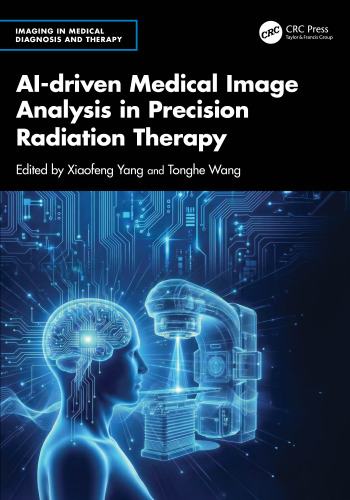
AI-Driven Medical Image Analysis in Precision Radiation Therapy explores the rapidly evolving intersection of artificial intelligence, medical imaging, and modern radiation oncology. The book presents a contemporary perspective on how advanced computational methods are transforming the way medical images are acquired, interpreted, quantified, and incorporated into radiation treatment planning. By combining concepts from artificial intelligence, image processing, radiology, and radiation medicine, it provides readers with an understanding of the technologies supporting increasingly personalized cancer care.
Medical imaging is fundamental to radiation therapy because accurate identification of tumors and surrounding normal tissues is essential for designing safe and effective treatment plans. Conventional image interpretation and manual contouring can be time-consuming and may introduce variations between observers. Artificial intelligence offers new possibilities for improving these processes through automated image segmentation, feature extraction, image registration, classification, and quantitative analysis. This book examines how these capabilities can contribute to more consistent and efficient clinical workflows.
A central theme is the use of machine learning and deep learning to extract clinically meaningful information from imaging data. Readers are introduced to applications involving computed tomography, magnetic resonance imaging, positron emission tomography, and other imaging modalities used in oncology. The book explains how AI-based techniques can assist in identifying tumor boundaries, characterizing tissues, assessing treatment response, and generating quantitative imaging biomarkers that may support individualized therapeutic decisions.
The book also explores the role of AI throughout the radiation therapy workflow. Applications include image-guided radiation therapy, adaptive radiation therapy, treatment planning, dose optimization, quality assurance, and prediction of clinical outcomes. By integrating imaging information with patient-specific clinical and biological data, AI-driven systems have the potential to support precision treatment strategies while reducing unnecessary radiation exposure to healthy tissues.
Importantly, AI-Driven Medical Image Analysis in Precision Radiation Therapy also considers the challenges associated with implementing artificial intelligence in clinical practice. Issues such as data quality, dataset diversity, algorithmic bias, model interpretability, external validation, reproducibility, cybersecurity, and patient privacy are essential when developing reliable medical AI systems. Understanding these limitations is critical for ensuring that technological advances remain clinically meaningful, safe, and ethically responsible.
The book is intended for medical students, radiation oncologists, radiologists, medical physicists, biomedical engineers, researchers, and healthcare professionals interested in AI-enabled oncology. It can also serve as a useful reference for readers seeking an introduction to emerging computational approaches in medical image analysis and precision radiation therapy.
Overall, this book provides a forward-looking overview of how artificial intelligence can enhance image-based cancer treatment. By connecting technological innovation with clinical applications, it demonstrates the potential of AI to improve accuracy, efficiency, personalization, and decision-making in radiation oncology. It offers readers a foundation for understanding both the opportunities and responsibilities associated with integrating intelligent imaging technologies into the future of precision cancer care.
Downloads : AI-driven Medical Image Analysis in Precision Radiation Therapy